How Long Can a House Sit Without Siding in Cold Spring?
The honest answer depends on what is still covering the wall once the old siding comes off.
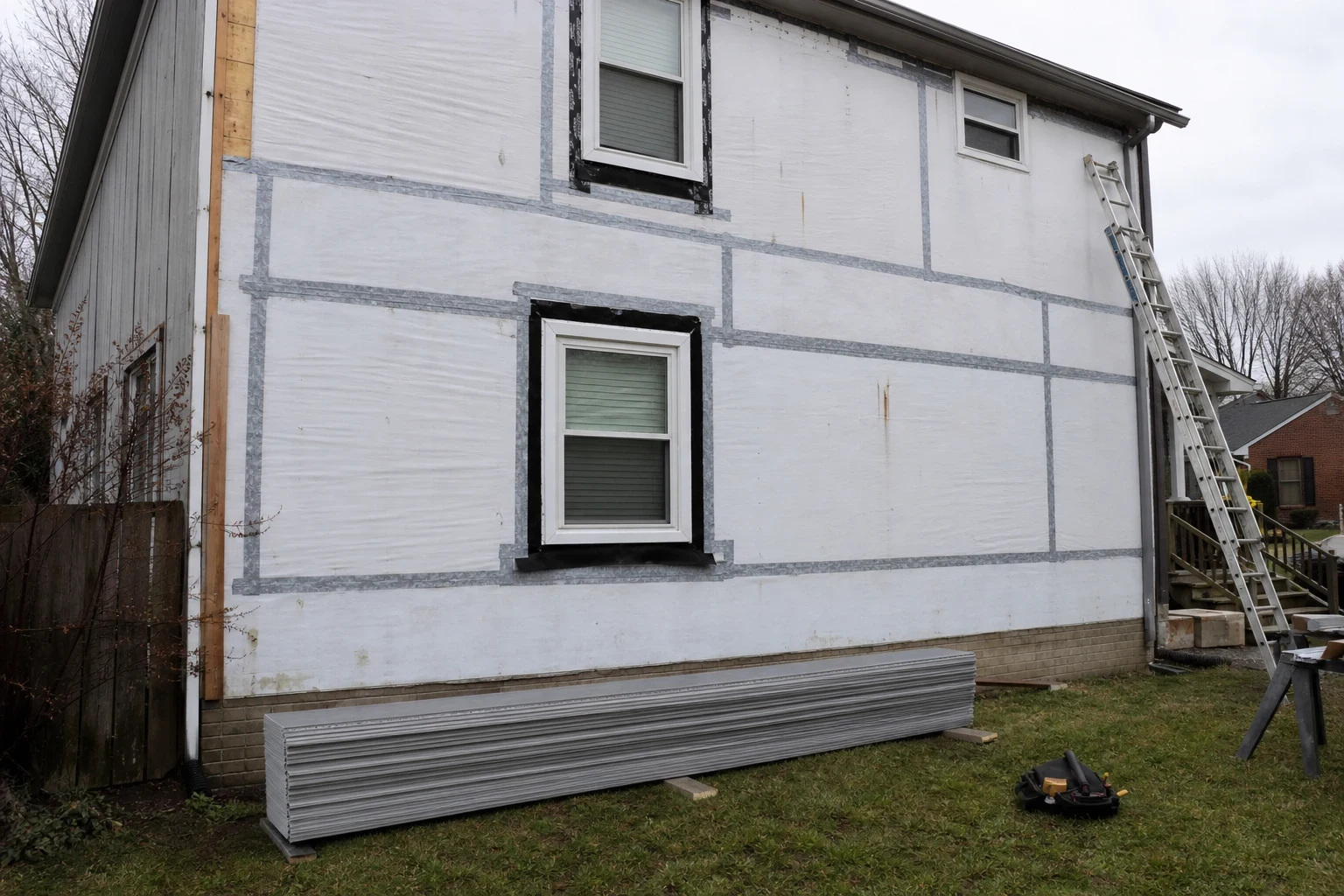
How long can a house sit without siding?
A house with bare wood sheathing should not sit without siding for more than a few days. With house wrap properly installed, taped and flashed, most walls can wait a few weeks, and up to the wrap's rated sunlight limit, often a few months. After that the wrap breaks down and water reaches the wood. (859) 765-6816
What protects the wall when the siding is off?
Siding is only the outer layer. Behind it sits a water-resistive barrier, usually house wrap or felt, and behind that the sheathing, which on most homes is plywood or OSB nailed to the studs. Flashing at windows, doors and the base of the wall ties those layers together so water runs out instead of in.
When siding comes off, the barrier becomes the only thing between the weather and the wood. How long the house can wait depends almost entirely on the condition of that barrier and how well it was installed. A clean, taped wrap with lapped seams is a temporary roof for your walls. Torn, loose or missing wrap is not.
How long can bare sheathing or house wrap handle the weather?
Here is how we think about the timeline on a typical job. These are practical guidelines, not promises, because a wall facing south and taking full sun ages faster than a shaded north wall.
If you are unsure what product is on your house, the brand is usually printed on the wrap. The manufacturer's installation sheet lists how long it can stay exposed to sunlight before it needs to be covered.
- Bare OSB or plywood with no barrier: a few days at most. One soaking rain can swell OSB edges, and swollen edges do not fully shrink back.
- Old felt paper left after siding removal: short term only. It is often brittle, torn at nail lines and already near the end of its life.
- New house wrap, properly lapped and taped: several weeks is usually fine, and many products allow a few months of sun before the material starts to weaken.
- Wrap that is flapping, torn or untaped at seams: treat it like bare sheathing. Wind lifts it, rain gets behind it and the protection is mostly gone.
What goes wrong when a wall waits too long?
Sunlight is the quiet problem. Ultraviolet light breaks down the fibers in house wrap until it loses its ability to shed water, even though it may still look intact. Siding installed over degraded wrap hides a weak barrier for years.
Water is the faster problem. Rain driven against an exposed wall finds every gap around windows and at the sill plate. OSB that stays wet swells, loses strength at the edges and can hold mildew. Fasteners rust, and in the worst cases the sheathing has to be cut out and replaced before any new siding goes on.
There is also the inside of the house to think about. Moisture that gets past the sheathing can reach insulation and the back side of drywall, where it often goes unnoticed until a stain or a musty smell shows up.
Do Northern Kentucky seasons change the answer?
They do. Spring here brings steady rain and strong thunderstorms, so an open wall in April is far more exposed than the same wall in a dry stretch of early fall. Summer sun and humidity speed up wrap degradation and keep wet sheathing from drying out.
Winter adds freeze and thaw. Water that gets behind loose wrap can freeze, push seams apart and open more paths for the next rain. Some siding materials, vinyl especially, are harder to install in deep cold, which can tempt a crew to leave walls wrapped and waiting longer than they should. Planning the project around the weather, rather than the other way around, keeps the exposed window short.
How we keep the gap between tear-off and new siding short
Our approach is simple: we do not strip more wall than we can protect and cover in a reasonable stretch of days. On most siding jobs we work one elevation at a time, checking the sheathing as it is exposed and putting new wrap and flashing on before the day ends.
Before anything comes off, you get a written quote that spells out the scope and what moves the price, including how we will handle soft or damaged sheathing if we find it. That way a wet spot behind the old siding becomes a known line item, not a surprise in the middle of the job. If storm damage left your siding torn or missing, we can also look at the roof and gutters during the same visit, since water from a failing gutter often caused the wall damage in the first place.
More questions about walls without siding
- Can I cover an exposed wall with a tarp?
- A well-secured tarp is better than nothing for a few days after storm damage. Fasten it to battens rather than stapling through it, and lap it so water runs off instead of pooling behind it.
- Should old or sun-damaged house wrap be replaced before new siding goes on?
- Usually, yes. If the wrap has been exposed past its rated limit or is torn and brittle, we recommend replacing it, because the new siding will hide it for decades.
- Will my insurance cover damage that happens while the siding is off?
- That depends on your policy and on what caused the siding loss. We can document what we find with photos and explain the process, but your insurance company makes the coverage decision.
- Can siding be installed in winter?
- Often it can, with care. Vinyl becomes stiffer in the cold and needs proper spacing for expansion, while fiber cement is less sensitive to temperature, so we plan the material and schedule together.
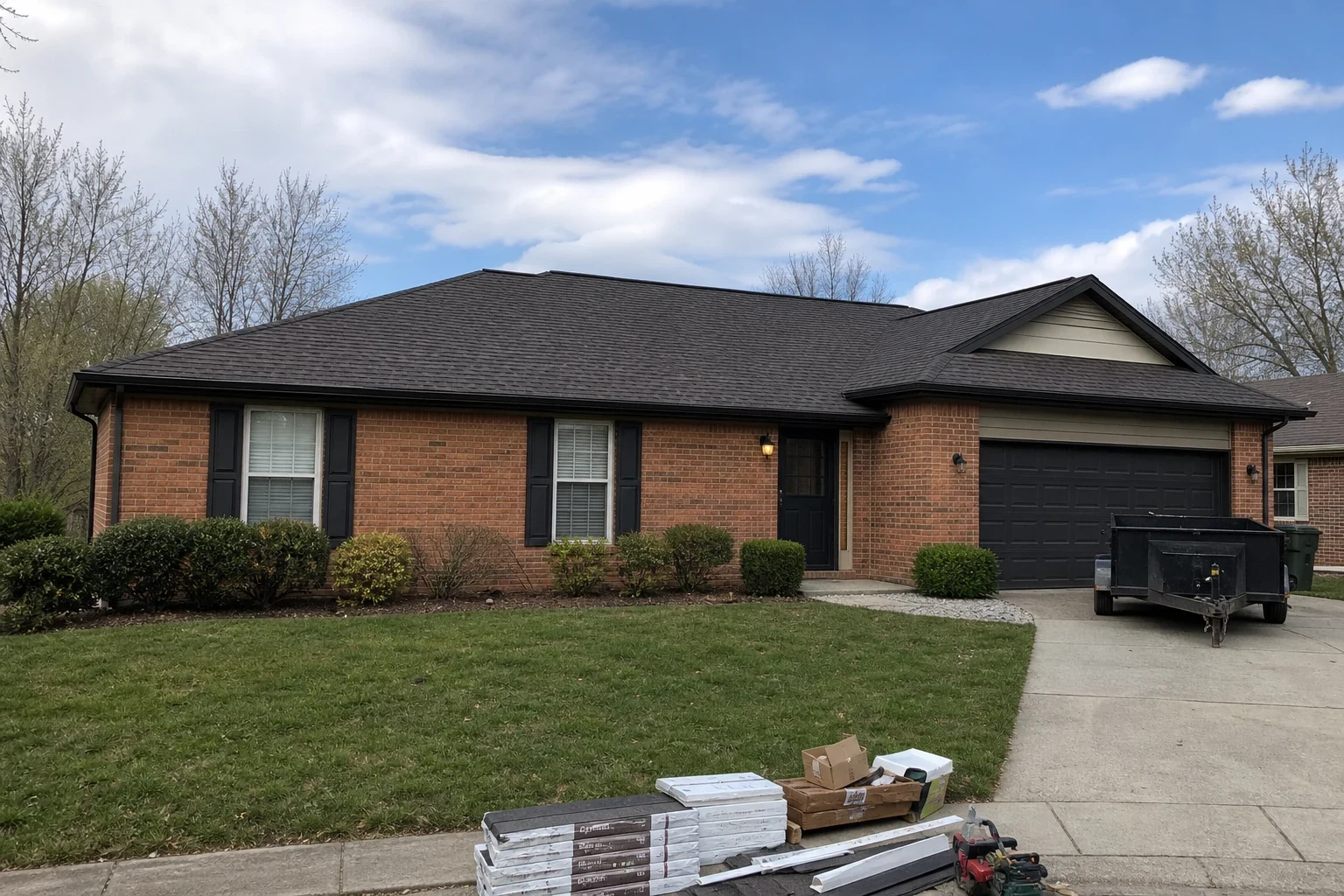
Siding off, or about to be?
Call us and we will come out for a free estimate. We check the wrap and sheathing, tell you honestly how long the wall can wait, and put the full scope in writing before any work starts.