ServicesStorm Damage Repair
Storm Damage Repair in Cold Spring
When hail or strong wind has hit your home, we go over the roof closely, record each problem in photos and write out the repair scope before a single nail is pulled. You see the damage, the fix and what drives the price, then decide calmly with facts to share with your insurer.
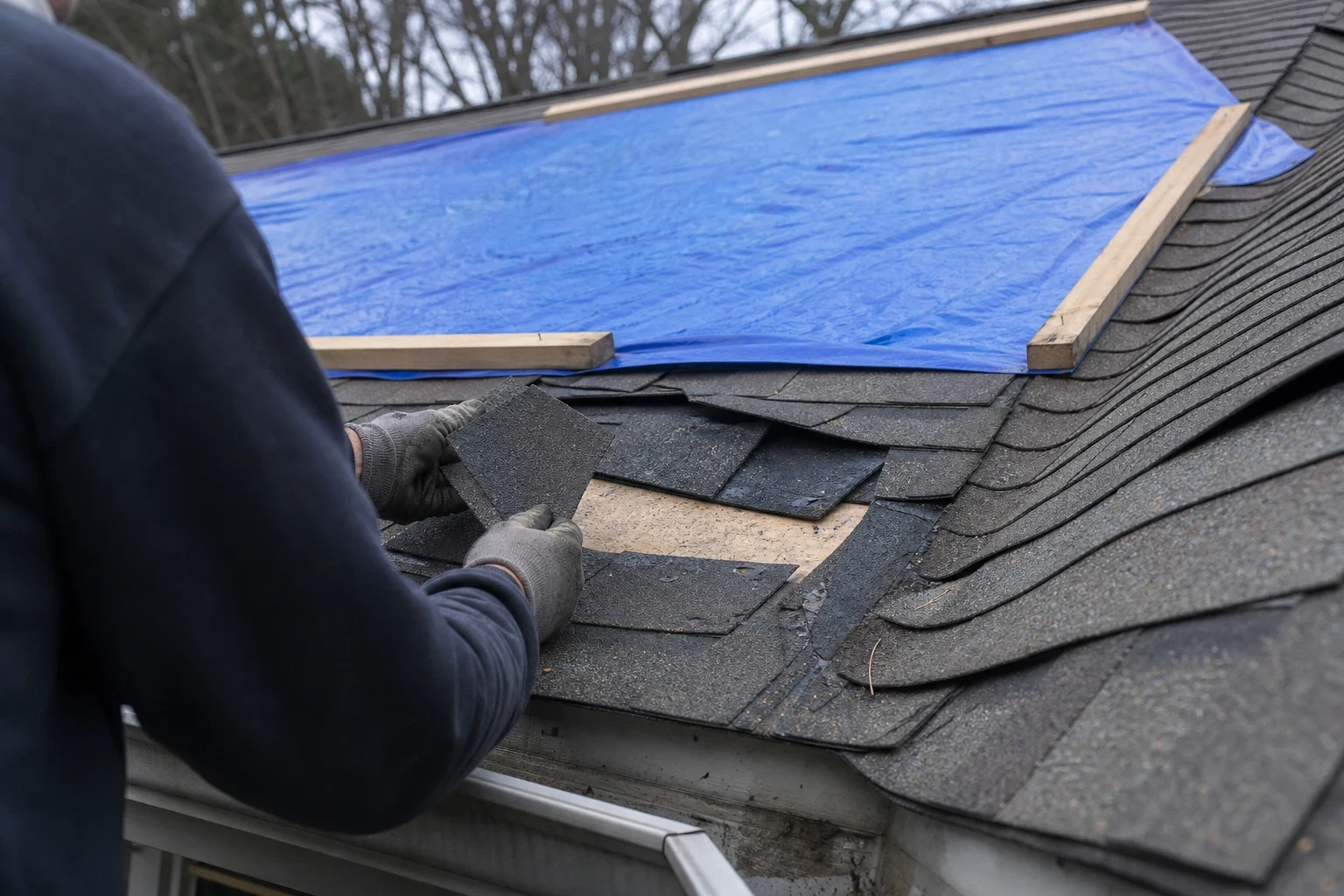
Storm repair that starts with a careful record
Storm damage is not always visible from the driveway. Wind lifts shingle tabs and breaks the seal strip underneath, so a roof can look fine and still leak at the next hard rain. Hail bruises the mat of an asphalt shingle and knocks granules loose, which shortens its life long before you ever see a drip.
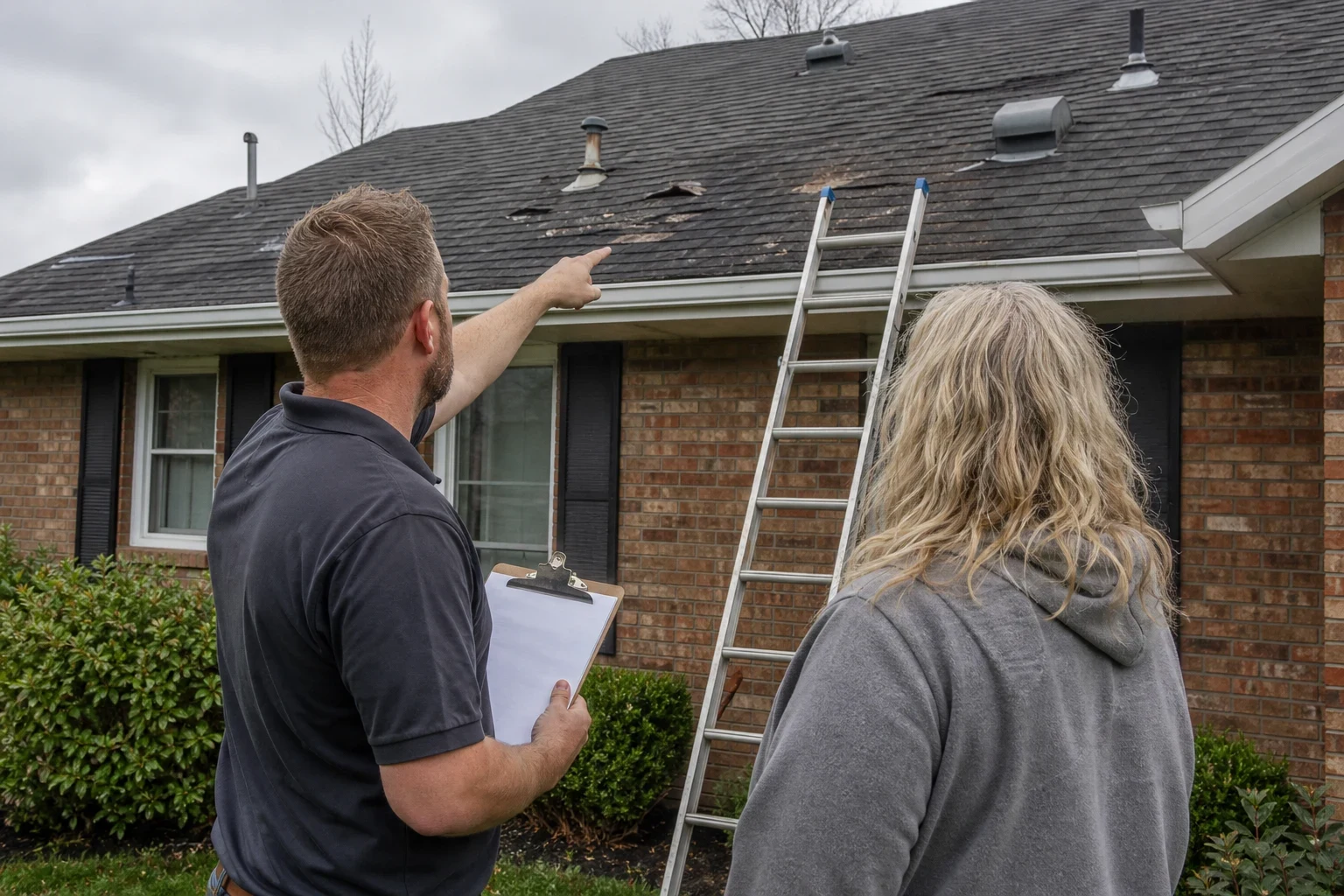
We look for both kinds of harm, along with dented vents, bent flashing and gutters pulled away from the fascia. Then we write down what we found, what we recommend repairing and what can safely wait. If a few shingles and a pipe boot will do it, we say so. If the storm hit an aging roof hard enough that patching would waste your money, we explain why and talk through roof replacement instead.
Spring and summer thunderstorms bring most of the damage we see, and a careful repair done promptly keeps a small opening from soaking the decking before winter freeze-thaw gets to work on it.
What our storm damage repair covers
- A full roof and exterior walk
- We check the field shingles, ridge, valleys, flashing, vents and pipe boots, then the gutters and the siding on the walls that faced the storm.
- Dated photos of every problem
- Each damaged area is photographed and labeled. You keep the set, which helps if you decide to open an insurance claim.
- Temporary cover when the roof is open
- If wind tore shingles off or a limb punctured the deck, we can secure a tarp over the area so water stays out until the repair is scheduled.
- Shingle and flashing repair
- We match replacement shingles as closely as current products allow, hand-nail them to the manufacturer's pattern and reseal or replace bent flashing at walls, chimneys and valleys.
- Decking checked before new shingles go down
- Soft, cracked or water-stained plywood is replaced so the new shingles have a sound base. The written scope lists this as a separate line, so you know what it adds.
- Gutters and siding in the same scope
- Storms bend gutter runs and crack siding panels. When they need attention, we include them alongside the roof work rather than sending you elsewhere.
Signs the last storm left damage behind
Granules piling up at the downspouts
A sudden drift of dark grit after a hailstorm usually means shingles lost part of their protective surface.
Missing, creased or flipped shingles
A creased tab has already lost its seal, even if it lies flat again. These are the first spots to leak in wind-driven rain.
Dents on vents, gutters or the AC unit
Soft metal shows hail clearly. If your gutters or roof vents are dented, the shingles took the same hits.
New stains on a ceiling or damp attic insulation
Water can travel along rafters before it shows, so a stain may sit a few feet from the actual opening.
Fallen branches or storm debris
A limb does harm even if it slid off before you got home. The impact can split shingles and crush the plywood below, leaving a weak spot that is hard to see from the yard.
What sets the price of a storm repair
Storm repairs range from a handful of shingles to a full slope, so we price only after the inspection. Your written quote names each factor below and how it applies to your roof. New customers can also use our limited-time offer of $50 off your first service call.
How much of the roof was hit
Scattered wind damage on one slope is a smaller job than hail bruising across every face of the roof.
Shingle matching
Older shingle lines are often discontinued. Finding the closest available match, or squaring off a larger section for a clean look, affects material cost.
What is under the shingles
Wet or broken decking and damaged underlayment add labor and material. We only find this once shingles come up, so the quote shows it as its own line.
Pitch, height and access
A steep pitch or a second story calls for more fall protection, roof jacks and time spent moving with care, and that shows up in the labor line.
Related gutter and siding work
Bent gutters or cracked siding panels add to the scope when they are part of the same storm.
How a storm repair runs, from first call to final walk
- 1
Your call and a free roof inspection
Tell us what you noticed and when the storm passed. We set a time to come out, inspect the roof and exterior, and take photos as we go.
- 2
Findings and scope in writing
You get a written list of the damage, the repairs we recommend and the factors that set the price. Nothing is added after you approve it unless we find something new, and then we show you before doing it.
- 3
Help with the insurance side
We explain how storm claims generally work and share our photos and scope with you. Whether to file is your decision, and if you ask, we can be on site when the adjuster visits.
- 4
Repair day with your home protected
We lay tarps over plantings and walkways and open only as much roof as we can close the same day. Before we pack up, a magnetic roller goes over the lawn, beds and drive to pick up loose nails.
- 5
A final walk with you
We show you the finished work, hand over after photos and point out anything worth watching.
Storm damage repair questions
Should I call my insurance company before I call you?
Either order works. Many homeowners find it easier to have the roof inspected first, so they know whether the damage is real and roughly how extensive before opening a claim. We give you photos and a written scope either way. We are not adjusters, so coverage decisions stay between you and your insurer.
My roof isn't leaking. Could it still be damaged?
Yes. Hail bruising and broken seal strips rarely leak right away. They lead to granule loss and lifted shingles that fail months later, often in the next round of heavy rain or ice. An inspection shows whether the storm did harm you would want documented now.
Can you match my existing shingles?
We bring sample shingles and compare color and profile on your roof. When an exact match is no longer made, we tell you how close the nearest option is and whether repairing a full slope would give a more even finish.
Is the repair work covered?
Our repairs carry a 10-year labor warranty. We are licensed and insured, and we put the warranty terms with your written quote so you can read them before the work begins.
Should I climb up and check the roof myself?
We would rather you didn't. Storm-damaged shingles can be loose and slick, and stepping on bruised shingles can make the damage worse. A look from the ground and a check of the attic for damp spots are plenty until we arrive.
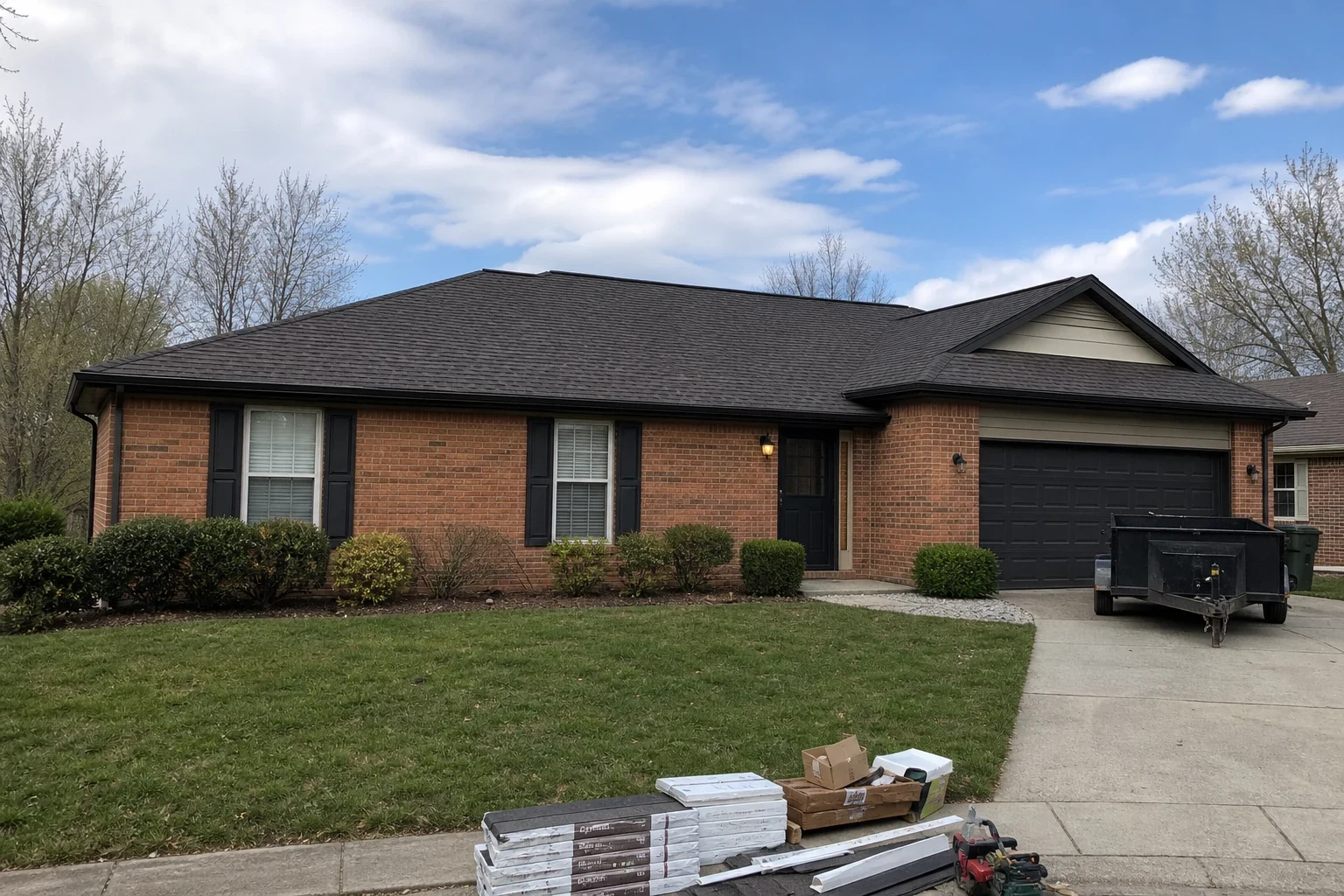
Have the storm damage looked at properly
Let us look over your roof, document what the storm did in photos and hand you a written repair scope. Each decision stays yours, made with the facts in front of you.